Program Notes
At-A-Glance
This is the first performance of this work by the BCSO.
Leonard Bernstein (1918–1990)
Symphonic Dances from West Side Story
When West Side Story burst onto the Broadway scene in 1957, it didn’t sound like “Broadway as usual.” Leonard Bernstein’s score fused classical technique with jazz bite and Latin dance rhythms in service of a modern Romeo and Juliet set amidst New York City street gangs. Central to that score was the idea that music could not only accompany drama, but drive it — blending character, conflict, dance, and emotion into a single musical language.
In 1960, Bernstein selected nine excerpts from the musical and transformed them into the Symphonic Dances from West Side Story, a unified orchestral suite that premiered in 1961 with the New York Philharmonic. It’s less a literal plot summary than a musical montage that charts moods: the urban tension of the opening “Prologue,” the hopeful yearning of “Somewhere,” the kinetic drive of the “Mambo” and “Cha-Cha,” and the urgent drama of “Cool,” “Rumble,” and “Finale.”
What to listen for:
- How Bernstein uses rhythm instead of choreography — finger snaps, percussion patterns, and sharply articulated brass create a streetwise pulse.
- The blending of jazz, Latin dance forms, and symphonic texture — a signature American hybrid that bridges Broadway and classical concert stages.
- Recurring melodic motives — such as the famous interval from “Maria” — that give emotional continuity even without words.
At-A-Glance
This is the first performance of Raiders of the Lost Ark by the BCSO.
Pieces from Star Wars have been featured by the BCSO many times over the years, most recently in April 2024.
John Williams (b. 1932)
Raiders March from Raiders of the Lost Ark
John Williams’ music has shaped the sound of the modern adventure story and helped define what blockbuster film music feels like. Known for his lush symphonic style and memorable themes, Williams evokes heroism, mystery, and emotional depth through orchestral color and rhythmic drive.
The “Raiders March” is the quintessential hero’s theme — a bold, sweeping tune introduced by bright brass fanfares and propelled by buoyant rhythms that suggest imminent action. In the concert hall, this theme works like a concentrated action sequence: the opening window into adventure, followed by exhilarating momentum woven through strings and snare drum.
What to listen for:
- Williams’ balance of muscle and sparkle — power in the brass, nuance in the internal lines and countermelodies.
- The way the snare drum and lower strings drive the sense of motion underneath the principal theme.
In this standard orchestral edition, the piece arrives, dazzles, and disappears before its energy can fade.
Star Wars Medley
John Williams’ Star Wars scores didn’t just accompany a film series — they helped re-legitimize the symphony orchestra as a voice for modern myth. Their memorable themes — from the triumphant “Main Title” to the ominous “Imperial March” — act like musical fingerprints that evoke characters, worlds, and narrative arcs instantly.
In this medley, you’ll hear familiar themes that have become part of the global musical lexicon. Williams’ orchestration choices — soaring brass, imposing low-brass menace, and intimate wind solos — help bring narrative contrast to life.
Listening tip:
Notice how orchestration functions narratively: bright trumpets often signal heroism, deep brass and percussion can evoke threat, and solo winds convey introspection — all without a single word.
Pieces from Star Wars have been featured by the BCSO many times over the years, most recently in April 2024.
At-A-Glance
Though the BCSO performed Phantom in 1996 and 1999, this is the first performance of this specific arrangement.
Andrew Lloyd Webber (b. 1948)
Selections from The Phantom of the Opera
Andrew Lloyd Webber helped redefine late–20th–century musical theater with eclectic, rock-infused works that became global phenomena. The Phantom of the Opera premiered in London in 1986 and quickly became emblematic of theatrical spectacle: romance, danger, glamour, and a score capable of sweeping from intimate lyricism to dramatic grandeur.
Tonight’s orchestral medley threads together six signature moments — from “Think of Me” to “Masquerade” — in a purpose-built concert arrangement of about twelve minutes. These selections reveal Lloyd Webber’s gift for long, lyrical melodic lines and dramatic pacing that feels almost cinematic despite its theatrical origins.
What to listen for:
- The contrast between luminous string lines and darker colors that evoke the hidden world of the Phantom.
- Waltz-like sweeps and lush harmonies that paint emotional landscapes, even without words or staging.
Duet Featuring Deanna Golden & A Surprise Guest
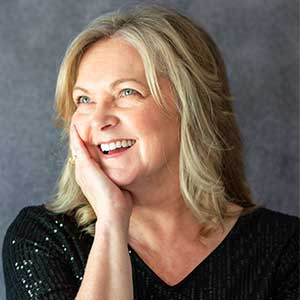 Deanna Golden is thrilled to be returning as soloist with the Butler Symphony. Since graduating from Slippery Rock University, her performance highlights include multiple performances in Carnegie Hall with the Philadelphia Symphony Orchestra and the Pittsburgh Symphony Orchestra, singing as soloist for Mozart Vesperae Solennes de Confessore with the Greater South Jersey Chorus, and a staged version of Handel’s Messiah as a core member of the Mendelssohn Choir of Pittsburgh.
Here in Butler, Deanna was the soprano soloist for Mozart Mass in C and Rutter’s Gloria and Requiem with Butler Ecumenical Choir, and she has performed several times in Butler Symphony’sSummer Recital Series. As the Music Director at Saint 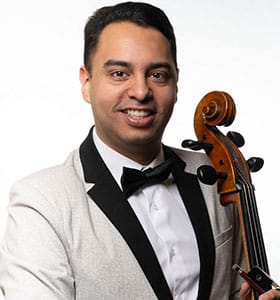 Andrews United Presbyterian Church, she enjoys collaborating with so many talented people in the community.
A surprise guest vocalist, William Garcia, will emerge from the shadows as The Phantom, joining Deanna for a stunning performance that brings the haunting beauty of The Phantom of the Opera to life.
At-A-Glance
This suite, drawn from the original film score, was most recently performed by the BCSO in June 2025.
Erich Wolfgang Korngold (1897–1957)
The Sea Hawk Suite
Before blockbuster film music was a familiar phrase, Erich Wolfgang Korngold helped invent it. A child prodigy and opera composer, Korngold brought a richly thematic, leitmotif-driven language to Hollywood that became the template for what we now think of as the Golden Age of film scoring.
His score for The Sea Hawk (1940) accompanies a swashbuckling seafaring adventure and served — along with other films like Robin Hood — as a major influence on later composers, including John Williams. The music uses recurring themes for heroism, romance, and nautical motion, combining them in lush orchestral colors that continue to register as pure cinematic music.
What to listen for:
- Rapid harmonic motion and sharply etched rhythms that create the sensation of wind in the sails, waves on the deck, and danger on the horizon.
- The way a heroic idea appears in different orchestral guises — like a character recurring in new dramatic situations.
At-A-Glance
The BCSO last performed this selection in 1999.
Richard Rodgers (1902–1979)
The Sound of Music: Selection for Orchestra
Richard Rodgers, one of the foremost figures in American musical theater, composed a string of shows with lyricists Lorenz Hart and Oscar Hammerstein II that helped define the mid-century Broadway sound. The Sound of Music (1959) stands among their best-known works and whose songs have become part of the broader American cultural memory.
This orchestral selection — arranged by Robert Russell Bennett — is a favorite among professional and community orchestras, threading together beloved melodies like “My Favorite Things,” “Do-Ré-Mi,” and “Climb Ev’ry Mountain.” While Rodgers’ music was originally shaped to support lyrics, the orchestral arrangement gives these songs new life through instrumental color.
What to listen for:
- How melody lines that once carried lyrics now speak through woodwinds and strings.
- Orchestral textures that evoke innocence, warmth, and reflection — even without words.
 Deanna Golden, Soloist
Soprano Deanna Golden returns to the Butler Symphony stage to perform selections from The Sound of Music, capturing the beauty, charm, and emotion of these iconic songs.